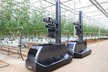
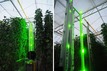
Bins filled with cherry tomatoes travel down a sleek concrete hallway wider than a soccer pitch. They move autonomously, tracing a magnetic railroad hidden under the ground. The hallway cuts through a 90-acre greenhouse that contains hundreds of rows of grape tomatoes.
Eventually, the bins arrive at a sorting station where the contents are poured onto a long conveyor belt. The tiny tomatoes – red, yellow, and green – are scanned by cameras that detect imperfections. Those that pass the test enter a complex assembly line where they are packaged, labeled, stacked, wrapped, and shipped to supermarkets across the United States, Canada, and Japan. The tomatoes go from the vine to the delivery truck within hours, often only touched by a human hand when first plucked.
This is Heritage Farms, a greenhouse in Leamington, Ont., an agricultural town about 45 minutes outside Windsor. Leamington is part of Essex County, the center of North America’s largest concentration of greenhouses: 135 businesses spanning 1,300 hectares. At least, that’s the size right now. The hub is on the cusp of expanding a further 50 percent in the next decade.
However, one key constraint is limiting growth: infrastructure. Greenhouses need water for complex drip irrigation systems, and Essex County’s water supply is at capacity. They also need natural gas for heating and electricity for supplemental lighting during the winter – two areas with skyrocketing costs. After seven years of growth, Ontario greenhouse hectares dedicated to peppers, cucumbers, and tomatoes have seen a net-zero gain in the past 18 months.
Read more at theglobeandmail.com