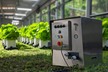
A Mexican greenhouse was able to overcome its irrigation problems, resulting in less fruit loss and a higher diameter of blueberries, thanks to their newly installed Trutina greenhouse monitoring system. The 300-ha farm in Jalisco grows blueberries and strawberries.

Problems with the crop and irrigation
Even though the farm has good experience in high-volume blueberry production, the owner was not fully satisfied with the outcome. They have been experiencing both quality and quantity-related issues, explains András Újszászi, the CTO of Gremon Systems. “They had problems with the fruit set that caused around 20% of fruit loss - a quite remarkable amount, which, translated to income, is a significant loss, compared to the maximum potential of their crop. The quality of the produced blueberries was not satisfactory either. In the blueberry industry, the diameter of the fruits is a strict requirement which producers need to comply with. Unfortunately, the grower was not able to reach the desired diameter with 30% of their crop - simply put, the blueberries were not large enough to keep up with the industry standards.”
The owner felt that they are producing only half of the amount that could be potentially achieved in their greenhouse due to the unsatisfactory number and size of fruits. This grower has been following Gremon Systems’ Linkedin channel for a while - so they were quite familiar with the importance of data monitoring and also with the fact that irrigation takes a significant effect on crop quality and quantity. In fact, by optimizing and improving irrigation, most of the mentioned problems, including other issues as well, can be overcome.
When the grower’s agriculture consultancy partner also recommended contacting Gremon Systems, the producer had no doubt that the Trutina monitoring system would be the right solution. “This system, especially the Blueberry edition, is designed to maximize the full potential of any blueberry crop by measuring and analyzing its data. Measuring the drain, light, EC, and other parameters, the system is able to show such invaluable correlations that help growers optimize their irrigation,” András shows.
“Thanks to Trutina, I’m now able to modify my irrigation strategy to steer the crop into a generative metabolism which has reduced my fruit setting losses,” said the owner when asking him how the system helps their daily operation. The system was also an eye-opener regarding drainage issues, thanks to the EC measurements. Earlier, the producer measured electroconductivity only at the end of the day, not realizing that the mid-day drainage EC is much higher than it should be - most likely due to an improper irrigation strategy. With Trutina, EC is measured every 5 seconds, fully automatically, supplying the information right into the system.

However, their story does not end here. Thanks to Trutina, they were able to realize a hidden (and crucial) issue that had a negative effect on the blueberry size.
“Hidden” issues with the irrigation system
The data monitoring system was also able to point out that the irrigation system did not work properly - an issue that could not have been detected without such technology. “I also realized that my irrigation machine made too short irrigations, harming the proper caliber of the fruit. As it turned out, it was starting the irrigations on time, but the duration of the irrigations was shorter than programmed, short enough to wet the top part of the pot but not to fill the pot properly with water. We were not able to detect this situation just by looking at the plants, as the top of the pot was wet after each irrigation. This malfunction resulted in less irrigation than the actual needs of the plants, causing the lack of diameter of the fruits and lowering the setting percentage of them - two of the main problems that caused so many headaches for us,” points out the owner.
The importance of real-time control
András says the above example shows well that without proper data control, the bottlenecks of the irrigation problems are exceptionally hard or even impossible to detect. “Such issues, when being present for a longer period of time, result in visible symptoms on the plants - usually when it is too late to overcome the issues efficiently. This is why it is crucial to have real-time feedback on what is happening with the crop. For growers, such inputs are crucial.”
The owner also confirms it: “There are many functions that are allowing me to verify that my irrigation strategy is properly applied and detect malfunctions very quickly thanks to the alarms programmed in my Trutina Notifier app. It is really taking my crop production to the desired level, it gives me the possibility to improve my irrigation strategy with data and real time information that allows me to make precise adjustments day by day - but also, I can even follow the changes from one irrigation to another.”
On the other hand, the owner got great help thanks to the automated operation: “Being aware of how our plants behave, I was able to switch from manual to automated irrigation. It was an important milestone for us as we have never used automated irrigation settings. Now the irrigation system works even more efficiently than before.”
Water and energy savings
Besides the higher quality and quantity, there is also a crucial achievement: water saving, thanks to optimized irrigation. Underirrigation and overirrigation are not present anymore, the system does its job exactly according to the plant needs, resulting in -30% of water usage compared to last year, achieving up to 25,000€/year (!) of water + fertilizer + energy saving. “This is like a big bonus that stays in the wallet of growers for a more cost-efficient operation and room to make further improvements.”
Current setup and the next steps
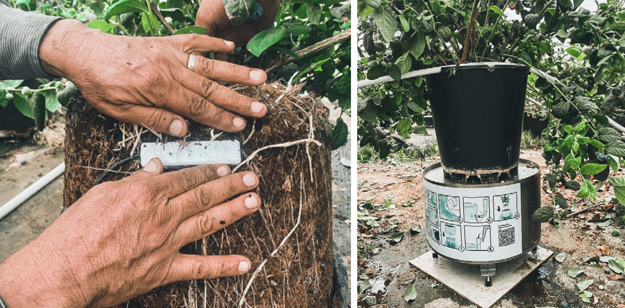
After the initial success, the grower expanded their system from one to four units to have even better control of their crop. Besides increasing the number of units, they decided to upgrade their system with extra water capacity sensors as well, so now they are able to monitor the water content at 10 cm and 30 cm depths in the pot. This multi-sensor arrangement allows them to detect and confirm that the water content on the tray is stable throughout the whole pot - important feedback that takes part in decision-making and strategy optimization.
András reveals that thanks to the promising results, the grower is planning to acquire the Strawberry edition as well for their strawberry plantation to get the most out of their production capabilities.
For more information: 
Gremon Systems
https://gremonsystems.com/contact-us/