In Luttelgeest in Flevopolder, Hoogweg Paprikakwekerijen grows some 50 million kilos of peppers in a sustainable way every year. To do so, the growers not only use renewable energy, but the company also generates and delivers back to the grid. And this is how greenhouse horticulture is helping the energy transition, according to this story from TenneT.
Changing energy system
The energy transition is changing the energy system and making people increasingly dependent on solar and wind energy. This means that a constant supply of electricity is flowing through the power grids to an ever-decreasing extent. What can the grid operator do together with companies like Hoogweg Paprikakwekerijen to keep the electricity grid in balance?
Varying supply
When the wind blows and the sun shines, there is a lot of electricity, at a lower price. Electricity supply to the grid is then financially less interesting, and there is a chance of the grid becoming overloaded. But at night or on windless, dark days, little energy is generated from the sun or wind, and there may be a shortage. To prevent this and to cope with peaks and troughs, grid operators are looking for new possibilities.
A good example is Hoogweg Paprikakwekerijen. This company makes flexible energy sources and energy users available to the grid. Network operators also like to see companies coming up with solutions themselves by taking into account over- and underloading of the grid. Hoogweg Paprikakwekerijen is prepared for the changing future and has been investing for years in the most sustainable possible production process in which flexibility of energy plays an important role.
Sustainable
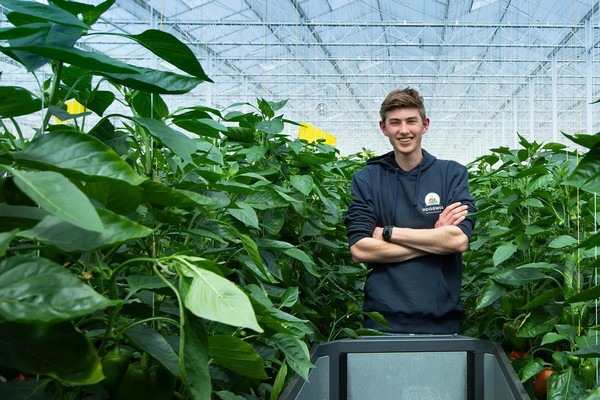
Peppers can be compared to top athletes, according to Gerard Fuite, engineer on behalf of Hoogweg. Everything has to be optimally balanced for the highest possible yield. The climate in a greenhouse has to be perfect: not too hot and not too cold, not too much nutrition but not too little either, and so on. The perfectly grown sustainable pepper demands quite a lot from the management.
Erik Hoogweg: "We have been using geothermal heat to heat 13 greenhouses since 2018. We collect rainwater in large basins, which we use as irrigation water for the plants. And soon, solar panels will float on top of that, with which we can generate 18 MW and then use it ourselves. In addition to CO2, the food for the plants, the cogeneration plants also generate electricity. More than we need ourselves. What we don't need, we feed back to the grid."
Own use
If necessary, TenneT buys electricity from Hoogweg Paprikakwekerijen. In this way, TenneT guarantees that electricity is always there. Within the company, Erik Hoogweg is concerned with the interpretation of energy. "The starting point is a good balance between the various heat sources we deploy. Through the APX, we see what the price per kWh is, and on that basis, we decide whether to sell electricity or not."
"By being smart about this, the investments you make are also profitable. Later this year, we will install an electric boiler. With solar energy that we don't need for the business process, we will produce hot water to heat the greenhouses. We also deploy the e-boiler at times when the high-voltage grid becomes full."
Being flexible with electricity is becoming increasingly important. Hoogweg Paprikakwekerijen is prepared and developing all the time, but we need many more companies like this.
Gerard: "We need to move towards a world where we use electricity as flexibly as possible. SMEs can play a big role in this. When we all go onto the motorway at the same time, congestion occurs. It's the same with the energy grid. If you want to get through, you have to make sure you get on the road at different times. And in the case of electricity, there is also a financial benefit. In the future, we need to focus more on electricity storage. And not just with batteries, but also converting electricity to hydrogen."
Martijn Ophuis, Ancillary Services Contracting: "For a long time, we have been used to electricity being available whenever we need it. The energy transition puts us in a situation where electricity is mainly available when the wind blows and when the sun shines. This regularly leads to a situation where demand for transmission capacity exceeds available capacity (grid congestion) or a situation where supply unexpectedly exceeds demand (imbalance).
"The grid operator solves this by deploying flexible capacity, where we ask a customer not to use part of the contracted transmission capacity or to take off or feed in more or less than planned at certain times."
Source: TenneT