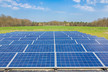
When it comes to organizational sustainability, Csiro from Australia can count on their own researchers to ask for ideas. One homegrown initiative aims to reduce emissions by replacing shade curtains with solar film in their glasshouse.
"We have an ambitious target to achieve net zero emissions (NZE) across our national property portfolio by 2030," the Csiro team explains. "Our Newcastle Energy Centre aims to reach that goal even earlier, by 2025. To help us get there, last year we ran a 'shark tank’-style competition to seek emissions reduction ideas from our own researchers. We offered the incentive of internal funding to develop the winning idea."

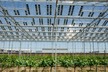
The winning team included researchers Anthony Chesman, Mei Gao, and Doojin Vak from Manufacturing and Cathryn O'Sullivan from Agriculture and Food. They presented the innovative idea to install lightweight, semi-transparent, printed solar films in our glasshouses. As well as generating power to run the glasshouses, the films could potentially enhance growth conditions through the manipulation of transmitted light waves.
Into the 'shark tank'
The competition started when Csiro researchers from different research areas were invited to take part in an ideation workshop. They were asked to formulate ideas for applying their research to our NZE challenges. Twenty-four teams of researchers were supported as they planned how to take their research through to an implementable project.
Just two weeks later, 18 of the teams presented their three-minute pitches to the judges, who were impressed by the range of technologies presented. The ideas included:
- converting plastic waste to fuel
- decision support tools for carbon emission savings
- carbon capture and storage
- solar thermal applications
- improving the energy efficiency of lab ovens
- powering diesel vehicles and vessels with green hydrogen.

Five ideas progressed to the final round for a chance to secure funding, with the idea to use solar film on glasshouses taking the prize.
Bringing the idea to life
After securing the funding, the research team undertook some work to further develop their project. They titled it Power Plants: Printable Solar Films for Agrivoltaic Applications. They developed a detailed plan for testing the solar films over 18 months at glasshouses at Csiro UQ St Lucia site in Brisbane. The project is expected to conclude in early 2024.
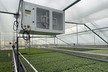
Before installing the solar film, Cathryn and the Agriculture and Food team ran an experiment with shade cloth to test the proposed solar film setup. They were testing how a range of different shading options affected plant growth for lettuce seedlings.
The shade cloth was positioned in a way that emulated the planned layout of the solar film strips. The plant growth data from this experiment will provide a control that can be used to see how solar film affects growth compared to shade cloth.
Where they are today
Cathryn and the Agriculture and Food team have just installed the first solar films in the St Lucia glasshouse. From now until October, they will be working with Csiro Manufacturing team to monitor plant growth and solar cell performance.
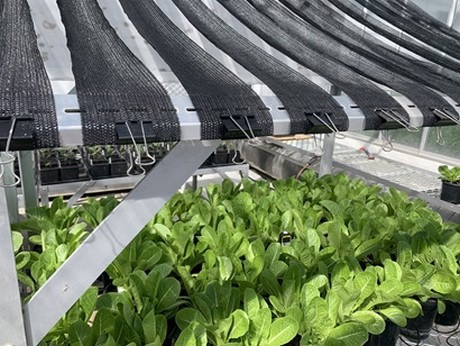
"These solar films use our existing solar cell technology. The findings from this phase will be used to develop solar cells that are optimized for plant growth, with further testing in the field to follow," they further explain.
A final report will look at plant growth and solar cell performance and calculate the potential emissions reduction if the technology were to be deployed in glasshouses across CSIRO.
Taking agrivoltaics to the next level
As well as helping explore how glasshouses can be used to reduce emissions and improve plant growth, this project also has research potential in the field of agrivoltaics.

Agrivoltaics is the application of photovoltaic (PV) devices (solar cells) to land and buildings primarily used for agricultural purposes such as livestock or aquaculture. The installation of conventional silicon modules on grazing land is well established. However, the use of PV technologies on closed cropping areas, such as glasshouses, is less well-developed. Meanwhile, the effect of shading on different crop species is yet to be fully understood.
Closed cropping areas offer additional control of the temperature, humidity, and light levels in the growth environment. So, their use will continue to expand with the increasing frequency of droughts and heat waves. Therefore, developing a better understanding of how these solar cells could be applied in these environments is central to realizing the full potential of this technology in the agricultural sector.
Source: csiro.au