Hold on to your Heinz. The latest looming food shortage is likely to include ketchup, coming hard on the heels of last year’s potato chip crisis and runs on mustard (in France, at least). Three summers’ worth of unprecedented high heat in the world’s key tomato-producing regions—Australia, Spain, and California’s central valley—have led to a precipitous decline in tomato paste stocks, the key ingredient for ketchup and other condiments. California, which produces a quarter of the world’s tomatoes and 95% of the tomatoes used in U.S. canned goods, delivered nearly 5% less than the expected crop in 2021 and 10% less in 2022 due to the ongoing drought, according to the United States Department of Agriculture. Record-setting precipitation earlier this year helped with drought conditions, but it also flooded fields, forcing farmers to postpone planting, which could lead to reduced yields this year as well.
Other grocery-store staples are likely to follow suit as climate change, driven by ever-increasing fossil fuel emissions, wreaks havoc on crops ranging from corn to canola oil. The impacts will ripple through the supply chain in unpredictable ways, leading to higher prices and shortages of not just weather-sensitive fruits and vegetables but also items that seem about as far removed from nature as a Flamin’ Hot Cheeto is from a cornfield. While our staple crops might eventually adapt to a warmer climate, evolution takes place on a timescale wildly out of sync with market demands. If ketchup, cocktail sauce, and marinara for pizza are to keep up with demand, science is going to have to step in to help speed things up.
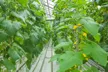
Tomatoes thrive in high heat, but like humans, they need cool nights to rest, especially when they are in bloom. If the hot nights of a heat wave last more than a few days, as they have started to do in major tomato-producing regions, the delicate yellow flowers wither on the vine, along with any hopes for juicy red fruit a few weeks later. Unlike, say, cereal companies that can switch suppliers when local crop shortages loom, most tomato-based product producers have vertically integrated supply chains: they provide their own seeds to contract farmers who grow to spec and then transport the crop to processing facilities nearby that also belong to the producers. Most of those tomatoes are processed into paste, a shelf-stable ingredient that condiment companies depend upon to keep production running even when fresh ones are out of season. But three years on, those reserves are starting to run thin. “This year is going to be critical,” says Mariano Alvarez, an evolutionary biologist and chief scientist at Avalo, a North Carolina-based bioscience company. “If they aren’t able to create a healthy harvest, it’s gonna be challenging for anybody that uses tomato paste in their products.”
Read more at time.com