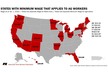
In joint statements on two draft bills of the Federal Ministry of Labor, the German Farmers' Association (DBV) and the German Federation of Agricultural and Forestry Employers' Associations (GLFA) have spoken out against an increase in the minimum wage to 12 euros as of October 1, 2022, and changes in the area of marginal employment.
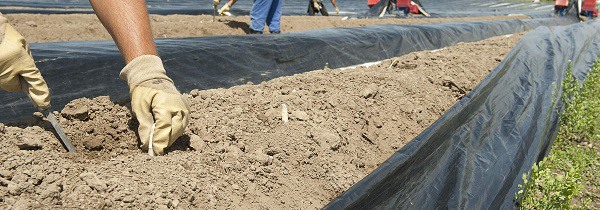
Photo: BBV
DBV President Joachim Rukwied massively criticizes the planned increase of the minimum wage to 12 euros: "This increase intensifies the already existing competitive pressure in agriculture and forestry and not only endangers the economic viability of companies, but above all displaces fruit and vegetable cultivation in European regions with lower wages and social standards. This deadline also calls into question operational planning security. We need a staggered transition."
The associations are calling for the green industry to postpone the increase and for a gradual increase in the statutory minimum wage. The president of the GLFA, Martin Empl, is fundamentally critical of the legislature's intervention in the minimum wage: "The planned increase in the statutory minimum wage is a renewed encroachment on the autonomy of collective bargaining protected by the German constitution. We reject this in principle. Negotiating wages is and remains the task of the collective bargaining parties, in which the state may not intervene."
Among the planned changes in the area of marginal employment, the associations welcome the planned increase in the mini-job limit from 450 euros to 520 euros. "The increase and dynamization was long overdue," said Rukwied. "This means that mini-jobbers will finally also have more money in their pockets at the end of the month in the event of minimum wage increases." However, the associations see the additional social security contribution burden for employers in the so-called transitional range between 520.01 euros and 1,600 euros as unacceptable.
The associations also decisively reject the planned new regulation of minimum wage working time recording obligations. "A daily electronic working time recording of our marginal employees will burden the companies with additional costs. In many cases, work does not begin and end on the company premises, so each employee would have to be equipped with a mobile recording device. And it is completely unclear how the employer is supposed to control its correct operation," says Empl.
In connection with the planned changes to marginal employment, the 70-day limit is to be temporarily extended in 2022 as well, in view of the current incidence of Covid infections. In addition, the associations demand clarifying regulations to facilitate the examination of the characteristic of the lack of professionalism in the case of insurance-exempt short-term employment.
The associations call on the law makers to develop measures to compensate for the additional costs incurred.
For more information: bauernverband.de