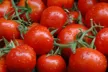
In recent years, cocopeat has been recognized by more and more growers as a natural soilless culture substrate. In the second "Pinduoduo's smart agriculture competition: AI "Growing Tomato" initiated by Pinduoduo, cocopeat from Van der Knaap was selected as the plant growth substrate. The project plans to use 6 months to grow high yield, high nutritional value tomatoes.
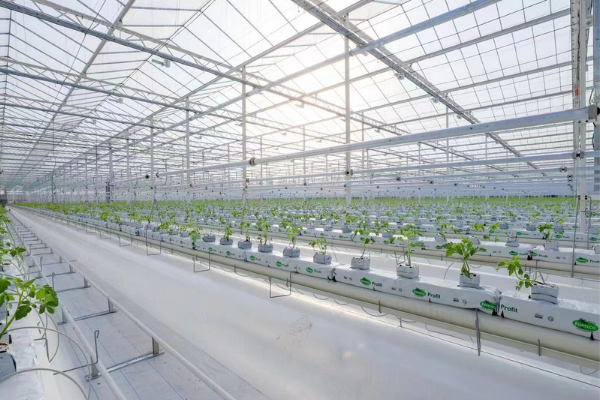
Manager Yang of Van der Knaap introduced some current applications of cocopeat. "Cocopeat is transported by high-pressure dehydration, there is no residual problem of bacteria before use, it is easy to control the microbial environment, and the crop yield is high. It is a good way to solve soil heavy metal pollution and salinization. As far as tomatoes are concerned, this is a crop with high fertilizer requirements, which requires multiple irrigations and is prone to corrosion of the substrate. The traditionally used peat substrate has small porosity, which is easy to cause difficult drainage and poor root respiration. Cocopeat has large porosity and is not resistant to corrosion and degradation, shrinks in size and sinks, and can maintain good air permeability after absorbing a lot of water, which is conducive to the development of fibrous roots. "
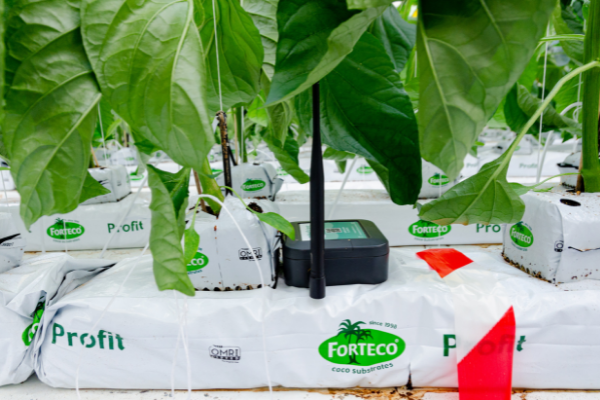
Manager Yang also explained that both rock wool and cocopeat have large porosity and good drainage. However, cocopeat is more widely used in the Asian market, and rock wool is more used in the European market. The reason is that, first, rock wool cannot be compressed, and the large volume brings about an increase in transportation costs, resulting in the price of rock wool in the Chinese market being about 1.5 times higher than that of cocopeat. The volume of cocopeat can achieve a compression ratio of 1:13, which greatly reduces the transportation cost. Second, rock wool is non-degradable, and has poor recycling and reuse; and compared with Europe, there is no mature recycling system in China, resulting in the use of rock wool being mostly one-time.
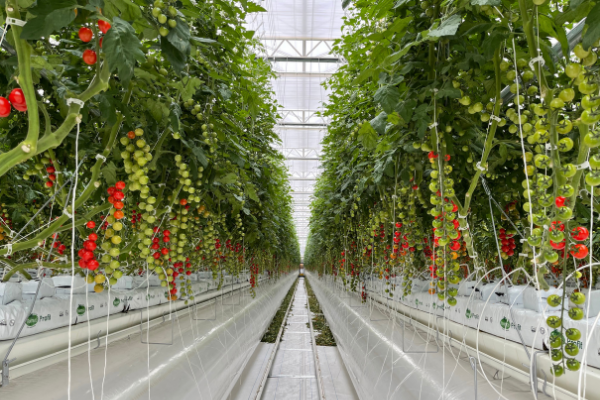
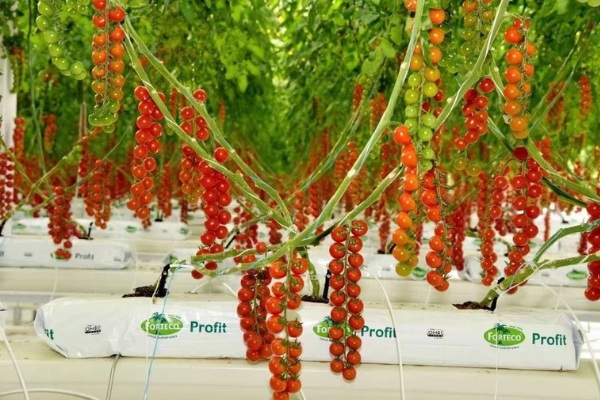
"Compared to the fertilizer imbalance, soil salinization and high disinfection cost brought by traditional planting methods, more and more Chinese growers have begun to use cocopeat for cultivation. According to the current statistics of actual production data, the yield of big-size tomato fruit grown using cocopeat substrate can reach 85kg/m²/year, and the small tomato fruit is about 40kg/m²/year, which is extremely cost-effective. "
In the face of the pandemic, Manager Yang also said that this had a certain impact on the supply of cocopeat. The raw materials of cocopeat are mainly obtained from India, Sri Lanka and other regions. Affected by the pandemic, the shipping schedule is unstable and the container is difficult to book, and the transportation cost has increased. At the same time, the collection of raw materials for making cocopeat has also been hindered. Usually, unprocessed coconut husks are received from farmers and then processed to form cocopeat that can be used for planting; cocopeat that has not been de-sodiumized cannot be used. At present, there are no raw materials that can be used to make cocopeat in China. Although Hainan is rich in coconut, the output and product varieties do not meet the production standards of cocopeat.
For more information:
Van der Knaap (Shanghai) Agricultural Technology Co., Ltd.
Mark Yang
Tel: +86 17712609063
[email protected]
www.vanderknaap.info