The Office of National Statistics (ONS) today (12 March) released January trade data, giving us the first insight to how the reported trade frictions have actually implicated the value of trade. It is worth noting that while EU exit has undoubtedly affected trade, there are other factors at play that are potentially distorting the data. The Coronavirus pandemic, stockpiling in the run up to EU exit and various difficulties on collecting data throughout the pandemic, will be impacting on January’s figures, as well as the last 12 months, as detailed by the ONS. The true impact of leaving the EU may not be able to be determined for a number of months.
For the agriculture sector, trade in January has been heavily impacted by these factors. Overall food and live animal exports are down 46% in value terms (-£545 million) compared to January 2020, although food and live animals exports to just the EU are down by around 59%, from £793m to £323m. Within the agricultural industry, the meat sector is among the hardest hit, with exports to the EU down by 59%, from £130m to £53m. Exports to the rest of the world for food and live animals are down around 19%, which indicates that factors beyond the new trading requirements with the EU are also implicating trade.
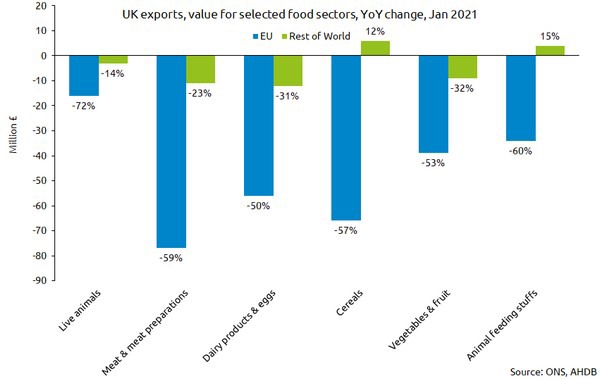
Like with UK exports, meat products have been the most affected, but vegetables and fruit have also suffered significantly. Going forward, AHDB will be looking into each sector in more detail as well as monitoring trade data as the year progressives which will give a more accurate picture of the full implications of Brexit.
For more information:
Agriculture and  Horticulture Development Board
Stoneleigh Park, Kenilworth
Warwickshire CV8 2TL
Tel.: +44 024 7669 2051
E-mail: [email protected]