If you ask North American and European consumers to describe the ideal tomatoes, the answers might vary considerably. Whereas European consumers prefer a good balance between acidity and sweetness, the North American market is primarily driven by sweetness. Specific preferences aside, tomato markets are generally transitioning towards producing more flavorful tomatoes. This shift comes after the industry spent years focusing on producing tomato varieties which facilitated long-distance transport at the expense of flavor.
“To facilitate the transportation of tomatoes, the industry successfully developed varieties with less flavor. Now, the consumer wants the flavor back,” explains David Perie, account manager at Rijk Zwaan USA, a subsidiary of the international vegetable breeding company Rijk Zwaan.
 The trend towards more flavorful tomatoes began with a renewed interest in snacking tomatoes, which have a good flavor profile and are increasingly used in a variety of recipes. As David explains, consumers used to opt mostly for large tomatoes which were then diced and added to different recipes. Consumers have increasingly found that small tomatoes can be used in recipes, either whole or sliced in half.
Catching up on Europe
In North America, the entire tomato industry is growing; however, the small tomato category is growing at a faster rate than larger, on-the-vine tomatoes. Differences in tomato preferences also vary based on organic or conventional production methods. According to David, the organic tomato market is particularly interested in small snacking tomatoes, which account for roughly 40% of the organic tomato market. Conversely, conventional tomato producers lean more towards larger, on-the-vine tomatoes which account for 40% of the conventional tomato market. Whether conventional or organic, the North American tomato industry is quickly expanding as the greenhouse industry continues to gain on the European greenhouse sector.
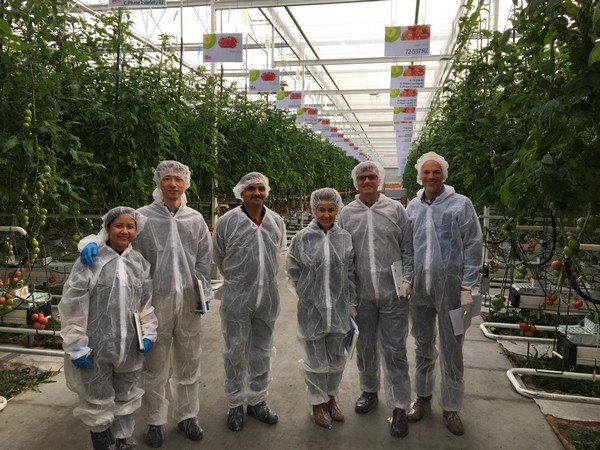
“In North America, greenhouses have always been behind the Netherlands and Europe, but we are rapidly catching up. This increase is due to a number of things, including concerns over food safety and consumers’ desire to purchase locally produced vegetables,” says David.
Across all industries, companies strive to find a “point of difference”, which is something that sets them apart from competitors. For seed companies including Rijk Zwaan, this can be rather challenging. According to David, point of difference with respects to vegetable seeds can relate to expected yield, ease of growing, visual quality of the fruit, flavor, natural resistance to pests and disease, etc. That said, variety development must incorporate the entire value chain and not simply production and consumption.
Research and development
“For a variety to succeed, it has to work throughout the entire value chain. It has to be easy for the grower, trader, retailer and consumer to use. If the variety doesn’t work in one of these aspects, it won’t work overall,” explains David.
Considering the importance of point of difference and feasibility across the value chain, Rijk Zwaan invests significantly in its in-house research & development. In fact, the company reinvests 30% of its profits into R&D, which is the lifeblood of the company.
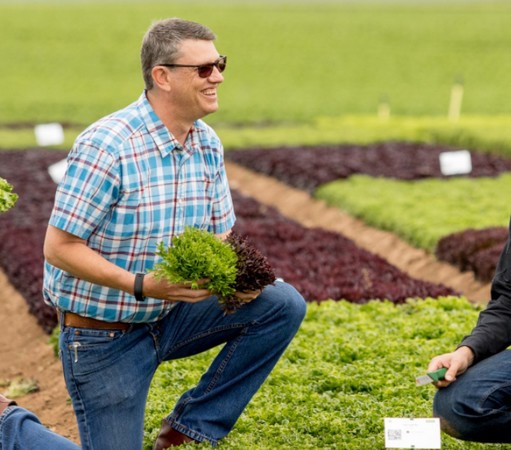
David also explains the importance of “trends to traits”, a guiding principle based on looking at consumer trends and communicating these trends to the breeders so that the varieties developed meet consumers’ needs rather than guessing at them.
Rijk Zwaan International’s commitment to R&D and responding to consumer trends has clearly served the company well, as it is one of the top five global seed companies. Of those five companies, Rijk Zwaan is the only one to be family-owned and selling only vegetable seeds. The company has roughly 3,500 employees in over 30 countries. Rijk Zwaan US is based in Salinas, California and has more 20+ employees. Looking ahead, the company is working to produce tomato seeds for the food service sector.