According to the recommendations of the World Health Organization (WHO), due to the increased risk of cardiovascular disease, the daily consumption of table salt should be reduced. To avoid the health consequences of iodine deficiency, it is necessary to include alternative food sources of this trace element in the human diet.
One of the most effective ways of improving nutrition is the biofortification of crops with minerals and vitamins. The purpose of a recent study was to determine the influence of iodine biofortification on the chemical composition of lettuce.
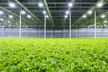
Plants were cultivated in a hydroponic system NFT (Nutrient Film Technique). The researchers compared the effect of iodine fertilization on the basic chemical composition, fatty acid profile, macro- and micronutrients, content of sugars, nitrogenous compounds, chlorides, and iodine compounds.
The results obtained in this research indicate that the application of iodine compounds has an influence on changes of concentration of iodine and other compounds in the treated samples. In lettuce, the main fatty acid was linolenic acid; however, fertilization with iodine did not affect the fatty acid profile in plants, except for concentrations of myristic and arachidic acids.
There was also found that iodine fortification has positive effects on concentrations of some micro- and micronutrients. Moreover, the application of 3.5-diISA decreased the concentration of nitrates as compared to control and other treatments. Therefore, it may be postulated that the production of lettuce fortified with iodosalicylates is worthy of consideration due to the fact that it may be a good source of iodine and other compounds in the human diet.
Source: MDPI.