In Belgium hardly 7% of the consumed fish is of own production, which makes the country strongly dependable on the import of fish products. There is also a higher demand for food that is grown sustainable. Recently KU Leuven made a SWOT-analysis for the Flemish and Dutch aquacultural sector, which shows that companies in that region have a need for innovation in production processes to be able to distinguish themselves internationally in production, processing, and trade of high value niche products.
Utilizing opportunities for the sustainable fish growth
Industrial synergy can offer a solution, so there is a future in the cooperation between multiple smaller companies. Sharing experience and expertise, integrating different growths, utilizing waste streams optimally, and lowering production costs can provide a higher economical profitability.
Industrial synergy can offer a solution, so there is a future in the cooperation between multiple smaller companies. Sharing experience and expertise, integrating different growths, utilizing waste streams optimally, and lowering production costs can provide a higher economical profitability.
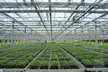
Sustainable fish growth can be achieved through aquaponics, the combination of fish and vegetable growth. In an ideal cooperation the grower uses the waste water of a fish grower and rain water enriched with nutrients from the fish excrement. But also energy exchange through co-generation is an option. Jouke Heringa, HZ University of Applied Sciences: "There is a lot of horticulture in the Netherlands, which creates opportunities for cooperation with fish growers."