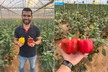
Tomatoes are the most important crop of the province of Almeria. This assertion can be considered true in both quantitative and qualitative terms, since the product is part of the collective imagination of Almeria's society. There is neither a fruit or vegetable produced so intensely in southern Europe, nor a food product that generates so much income. Because of all this, when one thinks about Almeria's agriculture, it is difficult for us to not think about this reddish solanaceae that has become the flagship of greenhouse agriculture.
Almeria's tomato sector has been an object of study in an article aimed at understanding the changes that have occurred in the product's business model. The study has been carried out by Jaime De Pablo Valenciano, Miguel A. Giacinti-Battistuzzi, Valentín Tassile and Tomás García Azcárate and analyses the changes both in the business structure and in the export dynamics that took place in the sector between the years 2009 and 2013.
Main conclusions of the study:
1) Tomatoes are the most consumed fruit and vegetable product in the United States and the European Union, due in large part to new consumption habits, the growing concerns about leading a healthy lifestyle and the growing middle class at a global level.
2) The European Union is the main world market for tomato exports: the twenty-eight account for 57.8% of the world volume in kilos and 65.7% of the product's global value.
3) Spain is the European' Union's main supplier of tomatoes, accounting for 23.78% and 21.7% of all European imports in tonnes and value, respectively. The province of Almeria represents 54.78% of the physical value and 51.47% of the monetary value of this sector, which gives it a position of strategic importance when it comes to the global consumption of this product.
4) The global trend in international trade in fruit and vegetables shows that the concentration of businesses is decreasing. According to this evidence, the authors reject that the concentration around a few marketing companies is the solution to the economic problems inherent to the sector. However, they offer alternatives to this, such as horizontal organizational strategies that may favour greater bargaining power, rapid adaptation to changes in markets and a strategic business management.
5) Specialization in the production process is another key factor in overcoming changes in Almeria's tomato business model, according to the authors. The current strategy of large distributors (the study cites the examples of Carrefour or Mercadona, among others) is the purchase of specific products to private companies, so this trend seems to be gaining weight ahead of the future.
6) Overall, there have been no significant changes, although the leading companies have been those responsible for the greater variations in terms of destination market strategies or prices. In turn, the authors point out that growth in volume has not been accompanied by a rise in the value of the product, as this has been adjusted to be more competitive in new markets. To conclude, the authors suggest a growing "uncertainty" about the future success of the model. This is attributed to the increasingly intense competition resulting from a progressive liberalization of the global markets.
7) When analysing the period between 2009 and 2013, certain very relevant factors, such as the Russian veto or Brexit, are not reflected. However, the conclusions and the overall image presented by the study are more than enough to understand the relevance of the issues raised.
Source: lavozdealmeria.es