Two years later a total of 10 modern greenhouse operations have been realized across the country as part of this program; many of them using the latest innovative technologies imported from Holland, Japan's partner country for their development plan to upscale domestic agricultural production.
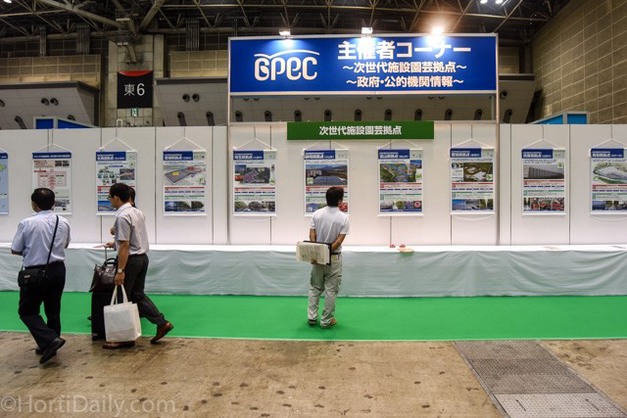
Two years ago these 10 greenhouse projects were announced at the GPEC. So far, nine have been built and completed. The last project is about to be completed soon.
Export opportunities
According to Cindy Heijdra, Agricultural Counsellor at the Embassy of the Netherlands in Tokyo, these ten projects are a good example of the possibilities in Japan for suppliers of greenhouse technology. "Today Japan is the largest importer of food in the world; the country is importing 60% of its food. In addition, the Japanese consumer is increasingly demanding more safely grown produce. At this moment Japan is an important supplier of Agrofood to Singapore and Hong Kong, but there are also opportunities to become a key supplier of quality and safe produce to growing middle classes in East Asia (for example China) and Southeast Asia (Malaysia, Indonesia). This make Japan a great country for agricultural investment too."And those investments have been made: over the last couple of years some larger scale greenhouses, ranging in size from 1.5 to 4.5 hectares, have been realized throughout the country. However, these projects are mostly realized with the help of excessive funding and an abundance of subsidies from the Japanese government. "In Japan it's not uncommon for projects to achieve financing with up to 75% in subsidies. In some cases the government funds 50% and the local prefecture grants another 25% of the funds needed."
No subsidy=no investment
Heijdra explained that this way of funding is a good catalyst to spur development, but there is also a downside to it. "When the government stops their subsidy programs, the development is slowed down significantly. This is a shame, because many Japanese investors and growers do not yet realize the good opportunities and high profitability of greenhouse farming without subsidies. There is a lack of confidence to invest without subsidies."Unfortunately the average Japanese farmer is still not driven by entrepreneurship and does not like to take too many risks. "They do like to visit the horticulture industry in Holland and acknowledge that they really want to learn from the Dutch, but still a lot of time goes by before they make actual investments and undertake real action in the form of investing in their own operations."
Heijdra still hopes that the Japanese will finally take their horticultural partnership with the Netherlands to the next level by making the investments without waiting for the help of subsidies. "The first projects were excellent examples of how to start, but now it's time for the Japanese to utilize this experience to create a strong domestic greenhouse industry driven by real entrepreneurship."
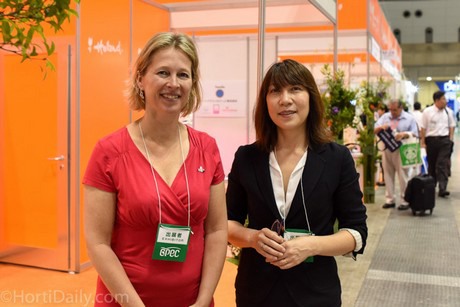
Cindy Heijdra and Chitose Hatakoshi of the Agricultural Department of the Dutch Embassy in Tokyo.
For more information:
Department of Agriculture of the Embassy of the Kingdom of the Netherlands in Tokyo - [email protected]