After the previous visit to the Simango family, the Global Farmers Master Class group deep dove into other agricultural business models; smallholder inclusion business models like those of Mr Shaun Cawood and Mr Koos van der Merwe, both from Mozambique and corporate farming business model like that of Mr George Kroussaniotaki in the Mkusi region in Zambia. These three cases are described below.
Case 1: Not all is mechanised to create jobs
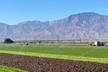
A bigger contrast between the Simango farming business and that of George is hardly imaginable. George, a 2012 Global Farmers Master Class alumni, farms 6000 ha's (1200 ha's irrigated) of land, runs 3000 cattle and employs directly and indirectly some 600 people. His farm is equipped with pivot irrigation, modern tractors, combines and other machinery. He has mechanised part of his operation, managed to build and maintain good relations with the government as well as with local communities and truly managed to build a profitable agricultural business in Zambia.
The careful reader may have noticed that George mechanised just part of his organization. Harvesting and processing maize still is a manual process. By choice. Manually harvesting maize creates jobs for hundreds of local men and women providing them with a way to make a decent living. Mechanizing this part of his business would result in loss of jobs, social instability and potentially social unrest.
From a western perspective it may be considered difficult to see hundreds of women do apparently mind-numbing repetitive work like manually grinding maize for hours on end, day after day. From the local perspective; these women have jobs with a pay that far exceeds the minimum, enabling them to make a good living for themselves and their families. For his permanent staff George invests in housing, education and healthcare. His son Harry returned to Zambia after finishing his study at the London Business School. Not only to eventually take over the farming business but also to continue George's commitment to improve the living standards of the communities he and his family are part of as well.
Case 2: Business success and improving the standards of living for local communities go hand in hand
2014 Young Global Farmers Master Class alumni, Mr Shaun Cawood's business is named CB Fresh, a cold storage, fresh food supplier. His business is based on the principle that business success and improving the standards of living for local communities go hand in hand.
Shaun visits smallholder communities, talks to the traditional chiefs, asks them about their best farmers and offers to make them even better. Looking for the best quality produce, he would offer them the best possible training & education, inputs, irrigation, soil analyses as well as guaranteed offtake of their yield. The success of the model is evidenced by the vastly increased yields of farmers he started mentoring.
An average smallholder produces some 800kg per ha. CB Fresh educated and supported farmers yield on average 3,5 tonnes. 'Not by doing anything special,' according to Shaun, 'just by doing things right'.
Shaun's model and business gained momentum; he included some 350 smallholder farmers in his business model, making sure they share their knowledge in their respective communities, because as Shaun stated it: 'there is a lack of and desperate need for role models.' He developed and maintained good government relations, vital for building the business.
Acknowledgement and a new venture
CB Fresh was identified by the World Economic Forum as a case study and Forbes Magazine dedicated a main feature on the company. Meanwhile Shaun joined the 2014 Young Global Farmers Master Class, which for him in a sense 'was a turning point' providing him with a sense of 'what the world has to offer, what the possibilities are.' Now Shaun is about to embark on a truly mindboggling new venture, leveraging the same body of thought; smallholder inclusion, which hopefully we can report upon soon.
Case 3: Challenges and myths to overcome; ‘agriculture needs to go through phases’
Mr Koos van der Merwe, a 2012 Global Farmers Master Class Alumni, runs a company named Mozambique Organicos. Koos starts off painting a rather grim picture of the enabling environment in Mozambique. Access to finance is difficult as land is not considered a valid basis for funding. Actually, Koos received financing only because of Rabobank backing.
Nice to know; Rabobank Foundation provided him with the means to set up a training for a value adding fruit pulp facility.
Import is hindered by intricate border systems, language barriers, etc. Inputs are available but at high costs and with a lack of skilled service providers. Infrastructure is challenging. Cheap land is a myth, there is land in abundance but high quality arable land, a lot less so. Cheap labour is a myth, there is labour in abundance but people generally lack education and experience. Making high profits on huge amounts of land quickly is virtually impossible. But as Koos states: 'Remember that agriculture in Europe started off with humble beginnings. Why expect Africa to grow in huge steps; agriculture needs to go through phases.' And helping local communities move from one phase to the next is exactly what Koos does.
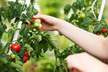
Mozambique Organicos is establishing an inclusive fruit supply chain with training as the backbone; 'you have to empower the local community,' Koos says. In addition to fruit production, Koos produces tomatoes and maize, offering local women the opportunity to harvest and sell the yield to local markets themselves. That helps support some 100 families. 'Dream big,' Koos says, 'be prepared, commit and make a difference!'
Although different in execution, all three rural entrepreneurs have one thing in common, a firm belief that involving the local communities is vital for both their operations to be successful and for African agriculture to bloom. Not by enforcing change, but by offering choices.
For more information
Rabobank
Madelon Kaspers
+31 6 1088 7244