A recent study by the Institute of Policy and Strategy for Agriculture and Rural Development shows that Vietnamese consumers in Hanoi struggle to find 'safe' fruit and vegetables; consumption in Hanoi is about 2,600 tons per day, or 950,000 tons a year. But the current amount supplied to the city is only 600,000 tons a year, equivalent to only 60 percent of demand.
This creates a paradox; while US and Japanese consumers can easily purchase specialty fruit labeled “Made in Vietnam” with details on origin and hygiene clearly stated, in Hanoi and Ho Chi Minh City consumers can’t determine where products are grown or what quality control they have undergone.
Local companies
This is the reason why Vietnamese greeenhouse grower VinEco was founced; after building their greenhouse last year, they began selling their first responsibly grown vegetables on the domestic market last October. VinEco is expected to supply up to 30 tons of 14 different types of vegetables a day, grown under the GlobalGAP and VietGAP standards, using modern technology imported from countries like Japan and Israel.
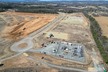
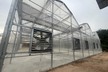
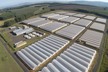
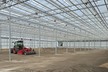
VinEco currently has a production inside a state of art 24.5 ha greenhouse in Vinh Phuc. The greenhouse, an investment of $44.2 million claims to be the largest of its kind in Vietnam. This facility grows 3,500 tons of organic vegetables each year, which meet VietGAP and other global standards.
But VinEco is not the only company in Vietnam that realizes the potential for safely grown produce; Mobile World (MWG), a giant in retail electronics in Vietnam, announced that it would also step into fresh food as well; Mr. Nguyen Duc Tai, CEO of MWG, said that existing demand for fresh food as well as clean agricultural products is that high that local supply currently fails to meet the demand.
Challenges for local investors
But despite this huge demand for safe agriculture products, investing in agriculture is not easy, Mr. Nguyen Nhu Tiep, Head of the National Agro-Forestry-Fisheries Quality Assurance Department expalined; "T have a clean supply of agricultural products, enterprises must invest in the entire chain, from farming to manufacturing and supply and this requires huge capital. However, food safety chains in Vietnam remain quite small, despite receiving support from the State budget.
A report from the Vietnam Chamber of Commerce and Industry showed that the number of enterprises investing in agriculture is low, accounting for just 1 percent of all enterprises in the country. Up to 95 percent of agricultural investors are small enterprises, while large enterprises account for only 3.7 percent and medium-sized enterprises only 1.32 percent. Meanwhile, SMEs involving in safe agricultural production often struggle to obtain capital, according to experts.
Source: english.vietnamnet.vn