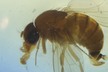
The Environmental protection Agency (EPA) has called for public submissions on the release of Tamarixia triozae, a new parasitoid of the Tomato Potato Psyllid (TPP), in New Zealand.
TomatoesNZ, along with Potatoes NZ Inc, Vegetables NZ Inc, NZ Tamarillo Growers Assoc. Inc. and Heinz-Watties NZ Ltd. made the application to the EPA to release this new biocontrol agent.
Submissions are open until March 24th 2016.
Make a submission using this form, or go to the EPA website.
We recommend including comments on:
• how TPP impacts your business,
• how you currently control TPP, and
• how you think Tamarixia would benefit your business, staff and community.
The submission application number is APP201955.
For additional information on making a submission: Advice for industry submitters
For additional information on the EPA process and timelines for this application: EPA information for submitters
The decision-making panel will weigh up the benefits vs the risks, and the level of support that the application receives versus any objections. Supporting submissions from growers affected by TPP will be crucial when the EPA decision making committee assesses the application.
What is Tamarixia?
Tamarixia is a small wasp that is a parasitoid of TPP. Tamarixia will actively seek out and target TPP within solanaceous crops and lay its eggs on the TPP. Once hatched, the Tamaraxia larva will consume the TPP nymph. Tamarixia is found naturally in North America and Mexico – where TPP is also found. Tamaraxia only feeds on Psyllids.
History - Searching for options
Since the first detection of TPP in NZ in 2006, research has sought to understand and manage TPP in New Zealand. One aspect of this research has been to look for biological control agents. In New Zealand there are already some insects (ladybird, hover fly, and lacewing) that will feed on the tomato potato psyllid. These insects only provide limited control of TPP. To date no parasitoids of TPP have been identified already present in NZ. Tamarixia would add to the effectiveness of the other insect predators and reduce insecticide use while achieving better control of the tomato potato psyllid.
Tamarixia triozae was originally identified by US researchers as a potential BCA, and testing has been carried out in containment in New Zealand to ensure Tamarixia will not harm NZ psyllid species. That research forms the basis of the application to the EPA.
Impacts of TPP
TPP’s arrival has had a number of impacts on tomato growers:
• IPM programmes have been disrupted;
• increased costs of production due to additional pest control and pest monitoring activities, and control of other pests becoming more difficult;
• reduced yield and fruit quality in some instances;
• Increased compliance costs for exporters.
In a survey of tomato and capsicum growers it was reported that seven out of eight tomato and three out of six capsicum operators reported that IPM programmes had been disrupted due to TPP. By adding Tamarixia to the options for managing TPP, it is hoped that greenhouse industries will benefit by re-establishing IPM programmes and reducing insecticide costs. TPP can be controlled reasonably well in greenhouses using insecticides, however relying on insecticides is not the industry’s preferred option.
Click here to read more about Tamarixia at www.tomatoesnz.co.nz