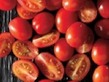
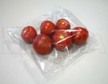
Grape and cherry tomatoes comprise about one quarter of retail tomato sales in the United States and are also important components in fresh-cut mixed vegetable trays. The latter require low temperatures and packaging which can produce a range of modified atmospheres (MA) to achieve 14 days of shelf-life. Postharvest handling recommendations for good tomato quality do not usually include low temperatures or MA.
Storage studies were conducted to ascertain the effect of low temperatures and MA on grape tomato quality.
Grape tomatoes (orange-red or more advanced color) can be stored in clamshells for up to 18 days at 5°C and still be of marketable quality if kept cold.
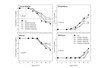
Continuous storage at 5°C in air resulted in minimal weight loss (a significant cause of quality loss in grape tomato stored at warmer temperatures), and retention of vitamin C levels, but no lycopene synthesis, and decreased sugar concentrations. However, if fruit were transferred from 5 or 10°C to warmer temperatures (i.e., 20°C), typical chilling injury symptoms (decay, poor color formation) occurred on fruit stored at 5°C but not at 10°C.