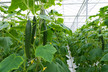
"We strongly believe in very intensive agriculture and horticulture. That's the only way to feed the world in a sustainable manner." Hein Deprez (54), also called the vegetable emperor in the industry, is the chairman of the board at Univeg, Greenyard Foods and Peatinvest, jointly accounting for 3.7 billion Euro of the revenue. Nineteen of the twenty biggest European supermarkets are clients of Univeg, which is a market leader in the Netherlands, Belgium and Germany. Overproduction of fruit and vegetables? Not at all, Deprez says: "There is under-consumption. If we want to turn that tide, the sector has to think more about better communication toward the consumer to avoid confusion and carry a clear message." What should be the message to the consumer then? Deprez: "All fruit and vegetables are healthy." This is a report from ABN AMRO, Visie op Agrarisch.
1. How is it that the market for fruit and vegetables has remained stable, and in some cases even decreased?
"People are eating less and less vegetables. In the weekend we do cook well and extensively, but during weekdays many consumers opt for a meal with hardly any vegetables. An adult eats 265 grammes of fruit and vegetables daily, on average. An apple and a peach, and you've got that already. 400 grammes is the government's advice for healthy living though. And a kilo is fine too: that's five pieces of fruit and a healthy serving of vegetables in the evening. So the market potential is enormous, but that decreasing consumption is a harsh reality, the figures show. Many people don't believe that's the case. They think they're eating enough fruit and vegetables, for instance because they're also counting fruit they think they're getting with fruit yoghurt, while that may only contain a few strawberry seeds and some flavourings and colourings. People eat a pizza and think: vegetables. I'm the man who, as a mushroom grower, invested in machines to cut mushrooms as thin as possible 25 years ago, so that a pizza could be garnished with one mushroom."
2. You say brands aren't stimulating sales in the fruit and vegetable sector. Why is this the case?
"Our sector works with small margins. Consultants have been advocating the creation of a brand with a story for twenty years. To improve profitability. The harsh reality is that hardly any successful brands exist. Pink Lady is the exception that confirms the rule. Branded products have a market share of less than one percent. Why? Because a brand requires standardized, uniform products at a fixed price that people know of. You can do that with processed food products, but hardly or not at all with fruit and vegetables. A consumer enjoys a tasty branded apple and wants to buy it again next time, but the taste might be a bit more sour, or worse: the apple isn't available anymore, because production isn't year-round. The result: disappointment and confusion. That breeds mistrust, making some even stop buying. That's the reason why brands don't contribute much to the consumption of fruit and vegetables. In addition, many other food producers use the fruit and veg health claim to promote their own product. In the fruit and vegetable sector, they're trying to use brands to position themselves, but this does not create any value for the consumer. This breeds confusion, because not using a brand doesn't mean a product isn't healthy. Confusion is highly undesirable. Were I in charge of communication for the European market, I would have that association nearly everyone immediately has with our product, that it's healthy, only in relation with all fruit and vegetables. Not with individual products. If we do do that as individual producers, we create contradictory reports and inhibit consumption."
3. What could Dutch primary producers do better?
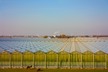
"First and foremost: the technological achievements are great. For instance, they're able to grow 700,000 kilogrammes of top quality tomatoes on one hectare. Many growers supply to Univeg, which has built a vertical chain with a logistics funnel, providing added value to the retailer for the benefit of their customer. This has been our vision for 25 years now, which explains our success. I think one of the reasons many Dutch growers are struggling to get good results, is in the cooperative, horizontally bundled systems. It used to be that they could generate market power that way. But not anymore. The future is in vertical systems, with clusters of strength being built. The Dutch grower slowly starts to realize that. The model they've been supporting for twenty years, with a massive amount of European (GMO) money, is bankrupt. Multiple, side by side vertical chains are possible."
4. How do you see the future of fruit and vegetable sales through the internet?
"I think it's marvellous. That's the only way we should be aiming. I think that within ten to fifteen years, 50% of sales will happen online. That's what retail has to aim for now, together with us. Then we can build and fill in an incredible proposition. Together with the best retailers, through their network of stores, a beautiful system can be built for online sales. A customer orders fresh vegetables for Monday, which he collects at the store next to his office. On Wednesday he picks up the online orders in the shop next to his mother's, and on Friday he doesn't have much time and has it delivered to his home."
5. Will new parties such as HelloFresh be big competitors?
"Twenty-five years ago, we started as an insignificant player. Now we are among the biggest in Europe. At the time, the competition told me: watch out, we are much stronger, have much more capital and bigger clients. Now we see that 75% of them have disappeared. We've been able to build that position through our vision, which we've consistently expanded. If we were to say now about online players: they can't do it, they're going in the wrong direction, that would be the same response those old parties gave us back then. It would be the death of us. We have to take online competition absolutely seriously. Logistically, new parties have the same problems to solve as retail, but together with the retailer we already have a better infrastructure. We have an advantage, but not if we wait too long to react. We have to be on top of the market developments."
Source: ABN AMRO/Visie op Agrarisch