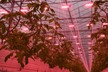
However, a reduction in yield (5.5% over the same period) was also recorded. Opposite to what was expected, the crop with dehumidifiers tended to be more vegetative early in the year and this is believed to be the primary cause of the yield reduction. The timely application of the normal 'basket' of generative actions in expected to reverse this effect but it remains to be proven. Without it, uptake of this technique and the potentially significant energy savings that it offers ti the edible crop sector will be minimal. The main driver for this project extension is to demonstrate that the yield reduction can be avoided whilst at least maintaining (if not increasing) the energy savings achieved in Year 1.
Note: the energy savings for ornamental crops is being determined by calculation, not commercial trials. The result is expected to be positive. The potential impact, if any, on crop development and the need for commercial trials or not is being discussed at the BPOA meeting on 22/10/13. If commercial trials are deemed necessary they will be the subject of a separate funding proposal.
The overall aims of the project are to:
- Reduce energy use and cost in heated glasshouses;
- Reduce carbon dioxide (CO2) emissions associated with glasshouse production;
- Improve yield quality;
- Reduce disease incidence and therefore the use of crop protection chemicals.
The specific objectives are to:
- Demonstrate that comparable yields can be grown with refrigerant based dehumidifiers;
- Determine the impact, if any, on crop development and any measures required to correct it;
- Optimise the energy saving delivered by a refrigeration-based dehumidification system in a commercial greenhouse;
- Effectively communicate the results to HDC members.