Germany is an important producer of fresh produce, main varieties being apples and asparagus, both of which fill a significant part of the fruit and vegetable acreage. Despite this, German horticulture is not big enough to satisfy domestic demand. A report by the German Ministry of Agriculture provides a detailed insight into the German fruit and vegetable production.
In Germany, about 17 million hectares is used for agricultural purposes. 1.3 percent of the total area is designated for the cultivation of special crops, i.e. fruit, vegetables, flowers and ornamental plants. This corresponds to 220,200 hectares.
Vegetables
In 2012, there were 7,220 companies active in German vegetable cultivation. The total acreage of these crops was 104,887 hectares, 103,972 hectares open air and 915 in greenhouses. The vast majority of growers are working in the open air: 6,982 companies. 1,803 companies are horticultural.
Asparagus on top
The top five crops grown in the open air are asparagus, carrots, onions, legumes and cabbage. The asparagus, carrots and onions fill about a third of the total acreage, lettuces account for nearly 12 percent.
In 2012, 6,969 growers cultivated in the open air for commercial purposes on an area of 114,630 hectares. Compared to 2011, the area grew by 2,900 hectares. Three states of Germany together contribute to half of the vegetable cultivation: North Rhine-Westphalia, Rhineland-Palatinate and Lower Saxony. And some states focus on specific crops, Schleswig-Holstein is responsible for 42 percent of the cabbage crop and 80 percent of total radish cultivation takes place in Palatinate. Most greenhouses you will find in Baden-Württemberg - almost a third of the total acreage.
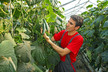
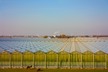
In greenhouses, mainly tomatoes, lettuce, cucumbers, peppers and radishes are grown. The total range of greenhouse vegetable was 915 hectares. The cultivated area amounted to 1,305 hectares.
Expressed in tons, the harvest in 2012 decreased with 0.2 million tons compared to 2011 and amounted to 3.63 million tons of vegetables. About half of this volume consists of carrots, cabbage, onions and lettuce. In consumption per capita, tomatoes are the undisputed number one with more than 25 kilos consumed per capita. In second place are onions 8.5 kilos, closely followed by carrots: 8 kg per capita.
In 2011, Germany imported 3.1 million tons of fresh vegetables. Imports from non-EU countries was 255,000 tons of total imports. The export volume amounted to 440,000 tons of vegetables.
Fruit
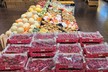
Besides apples, strawberries constitute the main fruit grown in Germany. In 2012, 2,505 growers cultivated 19,048 hectares. The largest part of the strawberries came from the open air. 399 hectares of the total acreage consisted of greenhouse cultivation. In volumes, 150,050 tons of strawberries were harvested in the open air, 5,788 tons came from the greenhouse. Most strawberries come from the states of Lower Saxony, North Rhine-Westphalia, Baden-Württemberg and Bavaria.
Berries
The commercial cultivation of berries is small in Germany. In 2012, a total of 279,626 tons was harvested on 6,839 hectares. This cultivation is mainly open air: 6.730 hectares against 109 hectares in greenhouses. Blueberries have the largest area, with 1,835 hectares. In second place are black berries with 1,598 hectares. The third and fourth place are occupied by raspberries and red and white currants. These are on 937 and 696 hectares respectively.
The orchards are mainly found in Baden-Württemberg, Lower Saxony, Rhineland-Palatinate and Saxony. The areas in these states are 15,000 hectares, 3,400 hectares, 9,000 hectares and 3,700 hectares respectively. Total acreage is 45,600 hectares, hosting about 81 million trees.
Apples
More than two-thirds of the total agricultural range in Germany is occupied by orchards of apple trees. In figures, this amounts to 32,000 hectares, which accounts for 70 percent. Since 2007, the number of apple trees has grown by 6 percent, which corresponds to 72 million trees in total. This growth is due to more intensive cultivation methods and smaller trees.
After apples, cherries are the main fruit produced in orchards. Sweet cherries are grown on 5,200 hectares, morello cherries on 2,300 hectares. Plums are grown on 3,900 hectares, pears on 1,900 hectares and Mirabelle and pure Clauden on 200 hectares.
Distributed by weight, cherries are on top with 35,946 tons, closely followed by plums with 35,567 tons and pears with 33,898 tons.
In total, nearly 7,500 growers are active in orchards, on a minimum acreage of half a hectare. Two-thirds of the growers are active on an acreage of at least ten hectares.
The market
The majority of the fruit harvest, 40 percent, is sold by cooperatives. This includes growers’ organizations, auctions, marketing cooperatives and farmers markets. 22 percent of products are placed on the market immediately, 13 percent finds its way to consumers through wholesalers and retail trade. 8 percent is sold in bulk, and 3 percent is bought by supermarkets and other independent retailers.
Although consumption in 2012 fell by one percent compared to the previous year, the German fruit production is not large enough to meet domestic demand. Fruit consumption in Germany was 5.6 million tons, equivalent to about 68 kilos per capita. Again, the most prevalent is the apple with 26 kilos per capita.
In 2011, 2.12 million tons of fruit were imported, most of which was derived from EU countries - 1.7 million tons. Nearly 400,000 tons were imported from the rest of the world. German exports are relatively low with 238.00 tons.