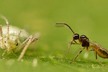
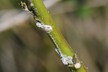
An increase in the number of plants affected by tomato russet mites (Aculops lycopersici) has been observed in the coast of Granada, Spain. This is mainly due to the warmer temperatures and winds registered in early March and Andalusia's Phytosanitary Alert and Information Network recommends keeping an eye on its development.
The average current levels, standing at just 1.3%, are not alarming, with the area of Albuñol-Albondón registering the highest percentage (3.5%). The insect has been observed at 30% of the sampled control stations.
Tomato russet mites cause damage on the plant's organs, which acquire a green-oily appearance, followed by shades of silver and finally a bronze tone when dry. The fruits affected become brown and crack, or acquire a silvery appearance, depending on the severity of the attack.
Intervention
With a higher insect population, it is recommended to take action directly on the spots where it originates. When more than 1 spot per 1,000 square metres are detected, a widespread treatment is justified, always under the supervision of the plantation's technician.
Source: hortoinfo.es