 As an association made up of German plant producers, greenhouse technology developers and suppliers for the horticultural sector, INDEGA has their finger on the pulse of the nation's horticultural industry. Among their goals, which include the promotion of their industry at home and abroad, is researching local and foreign markets for information they provide to members. One of the things they've found amongst the end users of their products, has been a trend toward consolidation due to market forces throughout Europe.
 INDEGA is an association for companies that provide technology and plant production services to the German horticultural industry. Most of the companies are small and medium-sized, and members range from young plant companies to manufacturers greenhouse climate technique, structures or growing substrates. The organization is run by a president, vice-president and a small board of directors that serve INDEGA's 80 or so members by looking into export opportunities and providing information.
“With the cooperation of universities and research institutions, we get the latest information on technological developments,” said INDEGA's Harald Braungardt. They also collect and provide market information for Germany and foreign markets. Through that research, they've noticed several trends globally and at home. "This market information we pass on to our members and we inform them about changes in abroad markets. We are here to help them by breaking open new markets and by giving them a better overview of the possibilities elsewhere."
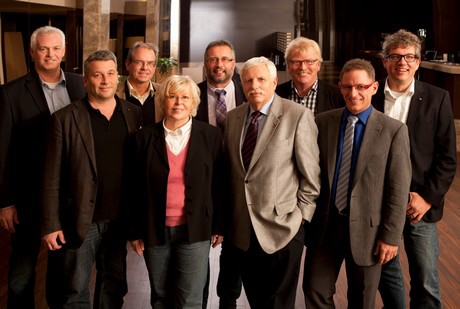
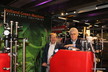
The INDEGA Board of Directors
Domestic market
“Horticulture in Germany has had a bad year,” noted Braungardt. “Weak sales have meant financial problems for growers, so it's caused many growers to merge and consolidate operations into fewer companies.” Similarly depressed markets in other European countries, like Italy and Spain, has spurred growers in other countries to turn to export markets in order to escape low domestic prices. Some of the product finds itself in Germany, and an increase in supplies results in even lower prices for German growers. That, in turn, worsens the German market and entices even more growers to turn to consolidation as a survival technique. Off course this has direct effect on the sales of supplies.”“We've seen this trend of merging for the past 10 years,” said Braungardt, “and it's gotten even stronger this year.” As for the German suppliers INDEGA represents, he said that the local market has more than enough technology and expertise to supply local growers, but a strong Dutch influence remains. There are several reasons for that, chief among them being the importance that horticulture has in the Netherlands. Braungardt: "Despite the fact that a lot of Dutch suppliers entered Germany with their turnkey projects in greenhouse vegetables, the Members of Indega still have a strong position in their domestic market. Locals are familiar with the German products because they trust on it when it says, "Made in Germany", a quality standard. As INDEGA it is our Job to make this an international standard for greenhouse supplies, we stand for "German thoroughness".
Market forecasts
Of the export markets INDEGA has studied, Brazil has proved to be the toughest to crack. While there's demand for their products from a burgeoning greenhouse scene, government regulations make for especially tough barriers to entry for small and mid-sized companies like those INDEGA serves. India is a better bet, in Braungardt's opinion, because the government there supports the horticultural industry and provides subsidies for growers.“I see a good market in India,” said Braungardt. “Their technology is far from that in Holland or Germany, so it will take some time for that market to develop, but I see good possibilities in India because the market is strongly supported by local governments.” He emphasized, however, that they advise their members to maintain their existing markets while going after new ones.
When always looking to markets abroad, Indega members are aware of not getting too much out of sight in the domestic markets. According to Braungardt, this sometimes let to a critical discussion amongst their members. “It not always about new markets,” said Braungardt. “We still have in mind our local market and that of our neighboring countries like Austria and Switzerland. We will never forget the market where it all started, because after all, that is where we got our good name from; Made in Germany! And if something is made in Germany, it also must be used in Germany, otherwise there is no selling point left. ”
For more information:
INDEGA - Representation of interests of the German horticulture industry
Harald Braungardt
[email protected]
www.indega.de