For over 30 years, Acadian Seaplants has processed seaweed for use in several industries including crop inputs, animal feed ingredients, cultivated sea-vegetables and functional ingredients derived from select species of marine plants. Focused research conducted at Acadian Seaplants since the 90’s has provided exciting insights into the benefits of seaweed for the horticultural sector.
“We still don't know everything there is to know about seaweed yet,” said Acadian's Agricultural Research Scientist, Jeff Norrie. “We have an active research program that's continually identifying new benefits.” Partnerships with global research institutions help spur those inquiries into new potential for their products and yielded new applications.
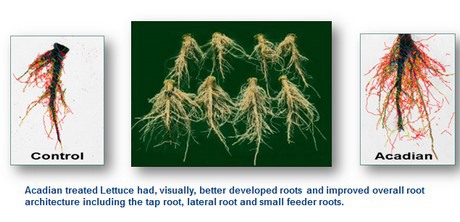
“Time-lapse imagery showcasing the effects of our products on plant growth demonstrated that our extract generated more lateral root growth in plants.” Norrie had marketed their product as an extract that promoted plant growth, in ways similar to a fertilizer. After their experiment using time-lapse photography, Acadian saw that their seaweed extracts also helped stimulate root generation and growth.
“It wasn't just about plant growth, but plant establishment,” he said. “There are organic components that stimulate the plant to generate root production, and that leads to faster establishment.”
Initially, Acadian was able to market its product to growers of high-end fruits, vegetables and ornamentals, but as the applications for its product continues to expand, they're now open to a wider variety of crops including broad acre crops.
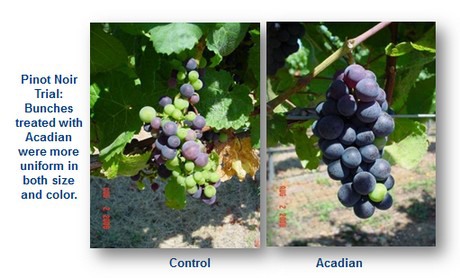
“Grapes, apples and tomatoes have always been big for us, but now we're evolving into crops like potatoes and maize,” said Norrie. “Berry crops have also been very responsive as our extract increases yield and quality of the berries.” In the past, the uncertain nature of whether seaweeds were strictly fertilizers or additives confused regulators and some growers. But Norrie explained that grower attitudes have matured to the point where their products are now seen as needed components of a healthy crop.
“The attitude now is to look to natural products and really examine the science of how they work,” Norrie said. “So we try to look closely at what the modes of action are and provide as much technical information and support to our clients as we possibly can.”
 For more information:
Acadian Seaplants Limited
Jeffrey Norrie, Ph.D., P.Ag. CPH -Agricultural Research Manager
www.acadianseaplants.com
“The attitude now is to look to natural products and really examine the science of how they work,” Norrie said. “So we try to look closely at what the modes of action are and provide as much technical information and support to our clients as we possibly can.”
For more information:Acadian Seaplants Limited
Jeffrey Norrie, Ph.D., P.Ag. CPH -Agricultural Research Manager
www.acadianseaplants.com