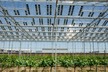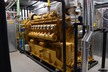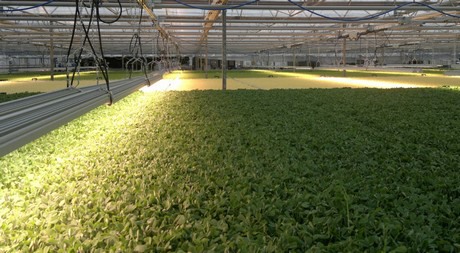
“We opened our greenhouse for pea shoots in April of 2010, and we knew we were going to have to install supplementary lights because we wanted to supply our customers year-round,” said Jan Bentley, W.S. Bentley's managing director. Though they were still approaching summer, they wanted to install lights for the coming Winter. So that led Bentley to experiment with different lights in a blacked out part of the greenhouse.
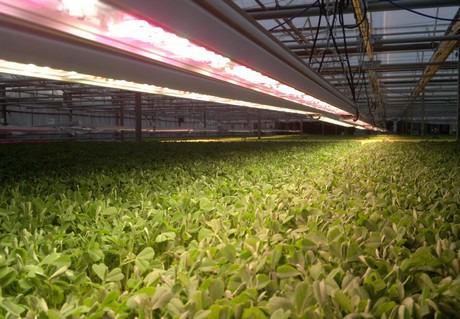
“We ran a series of trials on many different kinds of lights – both fluoro and LEDs,” said Bentley. "Several LED manufacturers supplied us with a wide range of different LED-set ups, which we tested on our pea shoot crop in a totally blacked out part of the greenhouse. In that way we could see for ourselves how each light spectrum affected the crop. We surveyed the crops quality, color, propagation speed, and of course the taste. Eventually we focused on non-fluorescent LEDs, because they gave us the best result. At the end of our trials, the Valoya LED luminaries seemed to give the right light spectrum."
W.S. Bentley realized early on that the limitations of their growing space necessitated lights that weren't too warm and could be mounted on a moving rig. "We were looking to create a very cost-efficient system," Bentley said. "That's why we opted to design a moving rig with a series of LED's that would move over the crop. By doing this, we could drastically lower the total amount of luminaries that we needed".
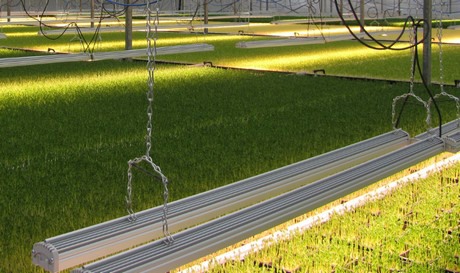
The moveable set-up ensured there would be no hotspots, and the flexibility of the system cut down on a big part of the costs of the system. “Aside from this, we didn't have a lot of head height, so to ensure that each pea shoot got the same amount of light, we needed to find the right distance and transportation speed."
“We equipped 4 bays 6.4m wide by 32m long. It takes 5 minutes to move the entire system, 4 meters forwards and 4 meters backwards between the posts. "We designed the transportation system ourselves, it works in a similar way to the shading system."
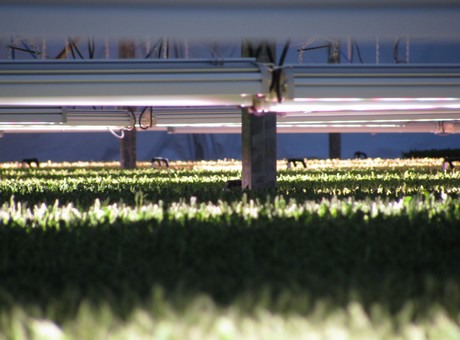
Bentley said they use the supplementary lighting from October through March, and the short growing period of pea shoots necessitates the use of supplementary lighting to give the product just the right attributes. Though the type of system might not be ideal for crops on a longer growing timetable, he said that growers with crops similar to the pea shoots' 14-day growing cycle might also benefit from a similar moving lighting system.
"The 14 day growing cycle is divided in two parts", Bentley said. "First there is a 7 day germination period, and in the second half we have to get the leaf canopy open and get the right flavor within the next seven days. This is only achievable with the help of the Valoya LED's in the darker parts of the year. Thanks to this we are capable of delivering quality produce year round, against a lower cost price than we would have if we would use high pressure sodium lights. Our electricity costs are much lower, it's only the heating cost we have to worry about nowadays".
 For more information:
Valoya
Lars Aikala
+538 40 546 6639
www.valoya.com