Lighting controlled for each shelf
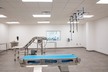
The cooling installations consist of an indirect system with a water/glycol mixture. The use of water/glycol allows the temperature in the maturation rooms to be controlled very accurately. Assimilation lighting has been installed: the lighting is switched on and off in various steps, allowing a natural sunrise and sunset to be simulated. To control the relative humidity very accurately, the cells come with two ultrasonic humidification units. The other rooms are fitted with racks with fluorescent growth lighting. Each rack has four culture levels. Lighting in these rooms can be controlled for each shelf on the racks.Advanced customised control
Research sets extra strict requirements for the control system: having perfect control of the conditions is of crucial importance. Additionally, the reproducibility of the experiments is a necessary requirement. The Climatemaster© control program developed by Nijssen registers and monitors all the controllable functions in the installation. As Nijssen is one of the few companies in the sector with in-house development of the control system for the installation, the control system could also be fully customised. Various extra functionalities were added to the controls for Syngenta.Also adjustable on site
Syngenta can monitor and control the climate cells in various ways. The control system is installed on a separate climate computer, on which all the settings are also displayed using visualisation windows. In addition, touchscreens are installed at each cell type, allowing the settings to be viewed and adjusted on site as well.Integrated controls
In this project the Nijssen engineers delivered another great piece of customisation: the controls are also integrated into Syngenta’s own building management system. A modbus protocol is used to link all the set points, measurements and alarms to the central Siemens BMS Building Management System, so that the test setups can also be monitored via this route.Uniform temperature
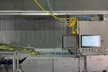
A thermographic camera was used to check the insulation in each climate chamber. The picture clearly shows that there are no cold thermal bridges in the climate chamber (no dark blue lines are visible) and that the temperature is uniform throughout the room. The coldest point is located at the ceiling exhaust, the warmest point is located at one of the lamps (125°C).Effect of thermal radiation
Temperature measurements were also taken in the Tissue Culture Room. The horizontal data loggers register the temperature in predefined locations. The perforated cooling wall on the left supplies conditioned air; fans high up in the cell extract the air and cool it down again.Uniform lighting
Extensive light measurements were performed in all the climate chambers. Measurements were performed in the Wheat Donor Room to demonstrate that the amount of light remains within the maximum allowable deviation anywhere on the culture tables. In the other culture rooms the light intensity and the uniformity of the lighting were also tested, especially if only the lighting of one or a few shelves is switched on.
Preventing stress in plants
Keeping the temperature in the entire room constant under high thermal radiation requires extensive air circulation. At the same time, an excessive air flow causes stress in the plants. The perfect engineering set-up has proven itself through practical tests: equal air speeds were measured on the various shelves. A hot-wire anemometer was used to measure an air speed of 0.25 m/s in the Tissue Culture Room, about 20% below the set limit of 0.30 m/s.More information
Nijssen Koeling BV, Leiden
[email protected]
+31 71 – 5216214
www.nijssen.com