Kenya: New techniques available to grow roses with less water spill
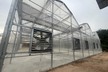
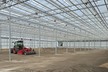
For several years, a consortium of Dutch greenhouse builders and farmers have been working together on sustainable farming systems with local partners in Kenya and Ethiopia. During this Green Farming program, a demonstration area of 15,000 m2 was built in Kenya and equipped to capture rainwater and reuse drainage water. In the basins, a huge bag protects the water from germs blowing in. There is a purification installation that pre-treats the groundwater. All these measures use half the amount of water and fertilizers, and provide the system with fifteen percent more yield.
To make sure that these applications can be used in other regions, researchers from Wageningen UR Greenhouse Horticulture, together with students from the Jomo Kenyatta University of Agriculture and Technology, gather hard data. Local officials are being convinced of the advantages of the techniques used.
Chris Blok, researcher at Wageningen UR Greenhouse Horticulture, concluded that the site in Kenya will need larger basins than in the Netherlands because the region has a long drought period. This should not be a problem as land is cheaper in Kenya. It is also possible to dig deeper than in the Netherlands because the groundwater level is lower. The intensity of the sun does mean that more expensive UV-light resistant foil is needed for the basin.
Source: Wageningen University Horticulture