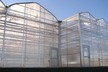
Netherlands: Sunergy research greenhouse converted to semi-closed greenhouse with vents
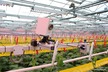
In early January of this year, the conversion was realised. The previous cover glass was replaced with diffuse light-transmitting cover glass, supplied by Horti Glass International (type D75 + AR). This concerns diffused glass with a haze factor of approximately 75% and is treated with a ‘Sunarc' Anti-Reflection etching. WUR measurement results give this glass a direct light transmission around 99%, and a hemispherical light transmission of about 89%.
The existing screen systems are refurbished, the lower screen having been supplied with a new canvas material, XLS 10 Revolux.
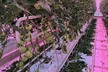
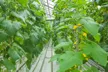
On 17 January the greenhouse was planted with tomatoes of the Komeett variety, together with the other tomato greenhouse of the IDC, the VenLowEnergy greenhouse. In the coming year, the cultivation and consumption in these two greenhouses will be compared. The expectation is that the SunergyKas, with an energy consumption below 20m³ p/m² per annum, will yield a high production considering the bright diffuse glass, while the VenLowEnergy greenhouse will see its energy consumption go as low as 12m³ p/m² annum as a result of the high-insulating glass. The l;atter, however, is likely to have somewhat higher costs and a slightly lower production result. The new SunergyKas also uses a new dehumidification system (based on the Next Generation semi-closed greenhouse), whereby the air can be dried without loss of latent heat.
Hopefully, at the end of this year will be clear how cultivation evolves in these two nurseries, and how light transmission and energy relate to each other.
The research and refurbishments are financed by the Dutch Ministry of Economic Affairs and the Horticulture Agency as part of the research program ‘Greenhouse as Energy Source’.
For more information:
Feije de Zwart
WUR – IDC Bleiswijk
Michael Schmitz
Horti Glass International
www.hortiglassinternational.com
Rob Grootscholten
Bom Groep
www.bomgroep.nl