In-all, the year hasn’t been bad for Lankester and Agro Adviesburo. “The geothermal wells in Holland are running smoothly, in particular the Green Well Westland. But in the field of drilling a lot is still to be accomplished. Geologists are debating endlessly on capacity, causing government funding to grind to a halt.” The industry, says Lankester, is suffering as a result. “If we go on like this, we won’t have a deep well in 30 years.”
A case in point being the Oudcampsepolder. Seven horticultural companies, united under the name GeoPower Oudcamp, want to drill down some 3900 metres, but not enough funding has been granted to make such an endeavour possible. Another issue complicating the affair is the SEI, an insurance against misfires. The SEI only covers one drill, a narrow margin banks are not willing to finance.
A case in point being the Oudcampsepolder. Seven horticultural companies, united under the name GeoPower Oudcamp, want to drill down some 3900 metres, but not enough funding has been granted to make such an endeavour possible. Another issue complicating the affair is the SEI, an insurance against misfires. The SEI only covers one drill, a narrow margin banks are not willing to finance.
On order to reduce the risk of a failed drill, as much information as possible on the soil has to be collected and waged. Agro Adviesburo consultancy is looking into it right now. Getting to the right data, however, is tricky: “Several parties are in possession of the data, but often it isn’t readily available or accessible. So in order to get proper knowledge on the nature of the soil, there is some hefty negotiation going on. We must always have something to offer in return. We still have hope that foreign advisers can convince people; in Germany and France geothermal heat is already much more exploited.”
But the red tape doesn’t end there. “Geothermal exploration licenses are much harder to get than before. You basically have to write a doctoral thesis to even apply for one. And even then the whole procedure can take up to two years.” Lankester would love to get the chance to be heard politically: “If only I could talk to the Minister Kamp [of Economics]. I could explain to him that deep geothermal energy is still the cheapest way to sustainable energy.”
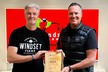
According to Léon Lankester of Agro Adviesburo consultancy, all debates on deep geothermal energy could be solved by drilling deep just once.
For more information:
Agro AdviesBuro b.v.
Tiendweg 18
2671 SB NAALDWIJK
Tel: +31 (0)174-637637
Mobiel: +31 (0) 657999889
Fax: +31 (0)174-640794