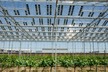
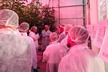
In the cold months of the year people in Germany generally grow lettuce in greenhouses, which of course are very energy-consuming. Due to rising prices for natural resources and the increasing awareness of consumers for the ecological impact of food production, Project ZINEG is currently developing new ways of energy-saving, environment-friendly growing.
Through the use of transparent energy screens horticulture can save a lot of energy in the cold time of year, as the greenhouse is much better insulated. However, these screens, in spite of their transparency, block some of the photosynthetic active radiation available to the plants. This can lead to yield losses, but also change components within the crops.
During the ZINEG project, lettuce plants were grown under different amounts of photosynthetic active radiation for four weeks. Halfway, some of the plants were moved to another focus group. Interestingly, there were no significant differences in weight of the heads or polyphenol concentration between the plants.
These results suggest that energy screens may be used at the early stages of lettuce cultivation, without loss of crop or loss of polyphenols. Before this method can be put into practice however, it should still be validated under normal production conditions in the greenhouse.